Understanding Fencing in Aspley
- 36.4% of homes owned outright Source: ABS 2021 Census QuickStats, Aspley
- 23.8% of homes are townhouses or semis Source: ABS 2021 Census QuickStats, Aspley
- Median age 43 Source: ABS 2021 Census QuickStats, Aspley
Local context
Aspley grew from small farms along Little Cabbage Tree Creek into a suburb after 1952, when its first residential subdivision was marketed. Its population jumped from 912 in 1954 to more than 10,000 by 1976. Today 12,871 people live here (ABS 2021), mostly in separate houses, with a large share of townhouses.
Common challenges
Homes from that boom are now 50 to 70 years old, and many original fences are rotting, leaning or patched. Brisbane's storm season runs from October to March, and that is when a weak fence is most likely to come down. At the same time, townhouse complexes, schools and sporting clubs need fencing that stands up to heavy use.
Why it matters
Older owners want to avoid ongoing maintenance and repeat callouts. Schools and clubs need fences that keep people safe and grounds secure, and committees need clear pricing to approve the work.
Our approach
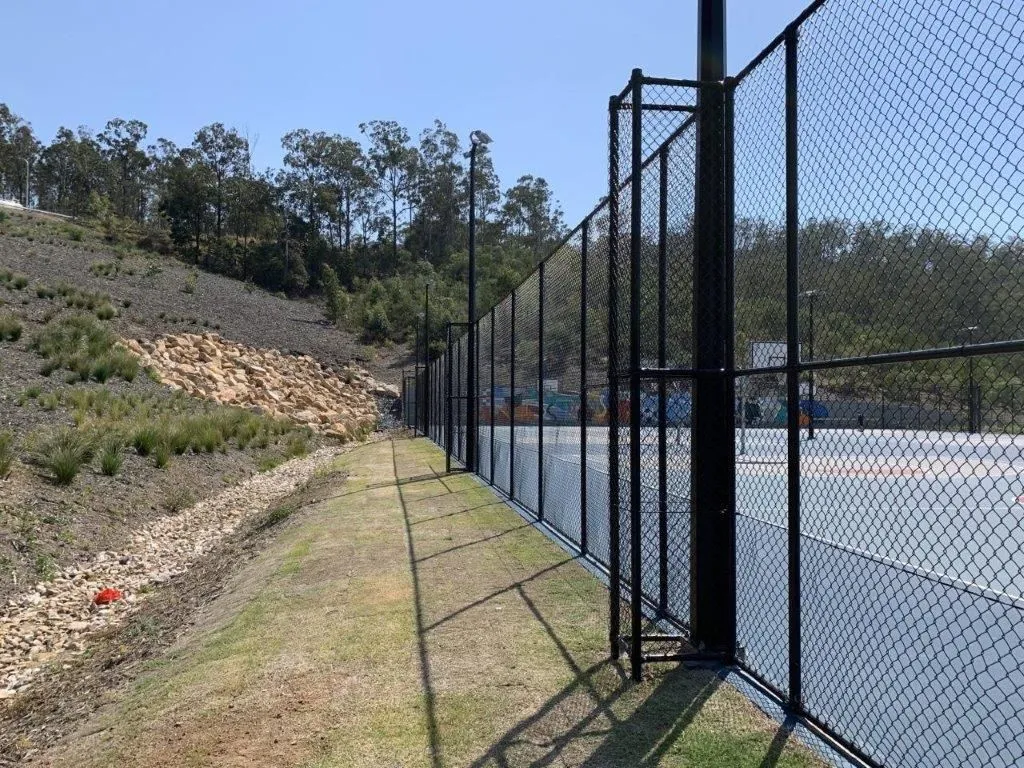
For fencing in Aspley we focus on materials that last with little upkeep: galvanised posts in concrete and coated or galvanised chain wire. We quote small repairs as readily as full replacements, and plan school and sports fencing around how the grounds are used. Chain wire fencing Aspley homeowners order from us comes galvanised, black powder-coated or PVC-coated. If a fence, screen and retaining wall together will stand more than 2 m above natural ground, Brisbane City Council building approval is needed, and we'll flag that at the measure. That's fencing in Aspley designed for the long term.
Sources: ABS 2021 Census QuickStats – Aspley (SAL30095); Queensland Places – Aspley
Common Fencing Problems in Aspley
Here are the issues we most often find when quoting fencing in Aspley. Knowing the cause helps you decide whether a repair or replacement makes sense for your fencing in Aspley.